Challenging Masculinity in the Black Community

On an early bus ride to work one cold morning, I had a conversation with an old drunkard. The conversation began when he had made a remark about the book I was reading, which happened to be the “Souls of Black Folk” by W.E.B. Dubois. He remarked how I was reading an essential book, to paraphrase him 

“ The black man is lost…..the black man isn’t the gangsta…..the white man is the real gangsta….the black man is weak…you see how they emasculate the black by having him wear dresses and these kids think it’s cool…. The black woman doesn’t respect the black man(as he was saying this, he pointed to two black female passengers who were in front of us). He spoke on until his stop.

This brief conversation left an impression on me. Everything this drunkard old man said was nothing I haven’t particularly heard before, spurted out particularly by older black men. I must say that some aspects of his brief speech I actually agree with.

Chiefly, that the black man is emasculated. But his emasculation has nothing to do with black men being depicted as being gay or wearing a dress, but is because the black man in this country holds no power.  A brief definition of masculinity states “possession of the qualities traditionally associated with men”. This is, of course, an expansive definition, leaving room for many interpretations. However, masculinity is generally associated with power. Now, let’s define power (in the noun sense). In a quick Google search, I have come upon two definitions. First, “the ability to do something or act in a particular way, especially as a faculty or quality”, second, “the capacity or ability to direct or influence the behavior of others or the course of events”.

Is the black man in this country in possession of either definition? I am particularly interested in the second definition as it is pertinent to my argument. When asking yourself, who are the most powerful people in the world, what comes to mind? For most people, it might be a political leader or a business magnate, two groups that exemplify the second definition to the fullest. Now, consider your typical political or business leader. What else comes to mind? Generally, men who wear suits, who are well spoken, and who possess great intelligence. Men in these positions are not your general ideals of urban masculinity. They are generally not physically imposing or brash in their speech, yet they hold considerable power in any modern society.

Now, when you begin to think of the race associated with these types of men, it generally tends to be white (i.e, Bill Gates, Donald Trump, Elon Musk). Of course, there are notable exceptions(Barack Obama, Jay-Z), but in general, we see the men with all the real power in our society as white men.

In Urban culture, masculinity is heavily associated with gangsterism( the exhibition of gangsta behavior,  promiscuity with many women, and the ability to murder other men with little remorse), This is something I have encountered many times myself as a black man who grew up in South Jamaica, Queens, NY. Your entire identity is based on not being deemed soft and earning the respect of your peers through acts of violence. OF course, this isn’t exclusive among inner city blacks( I can think of Machismo in Latin America as an outward example), but this is dangerously pervasive in the black community among black males.

I believe the contemporary understanding of what it means to be a man in the black community leads to violence in the inner city, the sexual objectification of black women, and the pervasiveness of homophobia in the black community. I believe that as black men we need to question what it really means to be a man, and if that definition is holding us back from achieving true masculinity, i.e, power.
The Answer to the Great American Pandemic

A short film I made a couple of years ago. It wasn’t the best of quality, but I did try my best on it. The premise of the short is a satire of the black male experience in the United States.

The Entertainment Dilemma: Black Success in White Markets

Black America has become white America’s source of entertainment. At a glance, a list of the richest African Americans, I noticed an alarming trend. Here is a link to the list so you can see for yourself: “http://www.ranker.com/list/the-20-richest-african-americans/worlds-richest-people-lists

Have you figured it out? Basically, with the exception of a few, nearly everyone on the list are entertainer of some sort. Whether it be sport, music, or film.

Now look at a list of the richest Americans in general, “http://www.forbes.com/forbes-400/top20/#3df0ffc3d8d5”, not one person is an entertainer; the list is made primarily of tech entrepreneurs, energy tycoons, and media moguls.

Black people have been “chucking and jiving” for white America since the minstrels of the 19th century. The only difference today is the market reach and the profitability. Many African Americans take great pride that black people have an influence on pop culture, but at what cost? Have black people become so ghettoized in how they aspire to be successful in this country?

Go to any urban school in this country and ask the typical black child what he or she aspires to be, and the most popular answer is either a sports athlete or a rapper. You will be hard-pressed to hear a child aspire to be a tech entrepreneur or business mogul. Why do young black people have such a limited scope of career choices? The answer lies in what black youth see in the media. The media is very important in how people view themselves. Films, music, television, etc., inform us on how to think, how to behave, and how to view life. When you’re black, you are particularly sensitive to media influence. This is because, as a minority, you have limited exposure to representation that you can relate to, and when you do get that representation, it holds a lot of sway on your thought process.

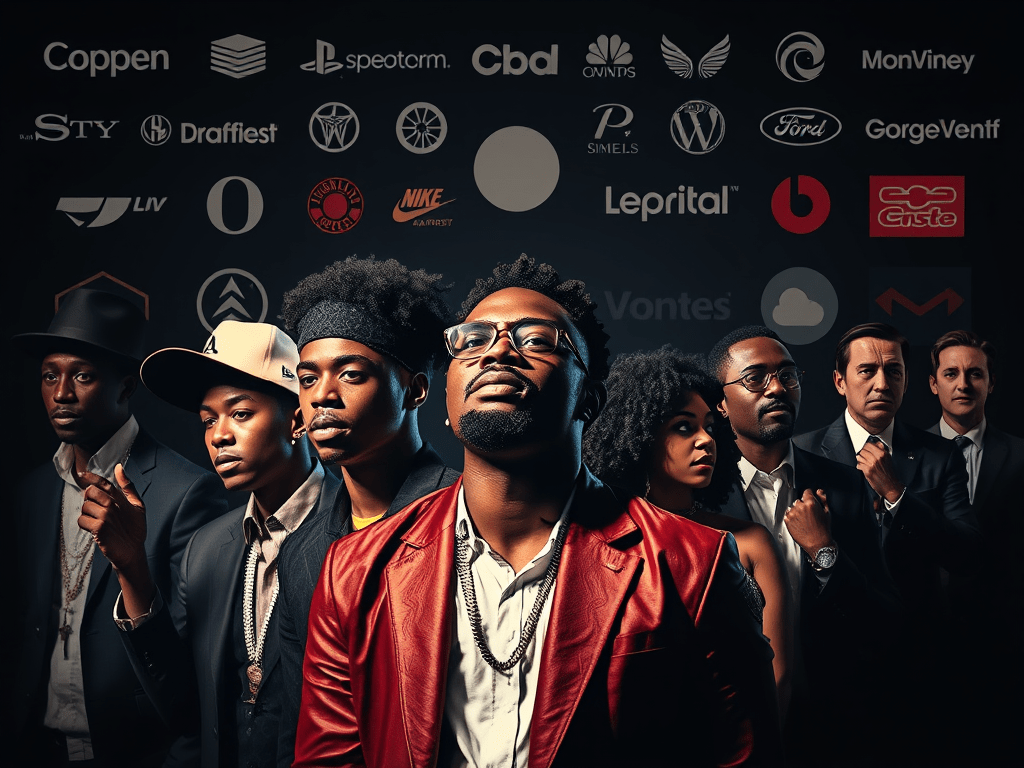
The worst of this is that black Americans don’t even fully profit from their talents; behind every multimillionaire black entertainer, there is a much richer white person in the background profiting handsomely from black ingenuity. Yes, Michael Jordan became a billionaire from his signature sneaker, but Nike, in return, became a multi-billion-dollar sportswear company with a near-monopolistic hold in their industry. Yeah, rappers make millions of dollars from tours and single sales, but record companies make billions of dollars every year in licensing royalties.

Black America epitomizes cool in this country, and corporations gladly use us as marketing tools, finding an athlete to petals their sneakers, rappers to wear their clothing, or appear in their soda commercials. I’m not at all angry at anybody for profiting off their marketability, but I do just want to fully analyze the situation in terms of race in this country.

We, as black people, need to do better for ourselves; we need to teach our children to have a diversity of aspirations. You have a lot better chance of becoming an oral surgeon or an electrical engineer than a rapper or an athlete. It is vital for the future of Black America that our youth have realistic aspirations.

Why Black America need a conservative revolution!!!

I know many black people took the victory of Donald Trump very hard, but I would like to suggest that maybe such a victory isn’t necessarily a bad thing. Black people in this country(certainly not all) are content with receiving government handouts. A Trump victory was seen as a sign of a reduction in public housing, food stamps, and Medicaid. My issue with this is how so many black people become so reliant on the government for self-sufficiency.

The bottom line is that the government is not going to help black people with their issues, which are (but not limited to) high rates of violent crime in black communities, low educational achievement, a high incarceration rate, high illegitimate births, and high instances of poverty. All these can neither be solved by either Democratic nor the Republican party.

In the case of inadequate education, is it a system of bad funding in the school systems or a culture that prompts anti-intellectualism in the black community? What is a school but not just bricks and books? It’s the pupil and the quality of teachers that truly set the educational standard. The chief reason Asians do so exceptionally well in school is because of their collective attitude towards education.

In the case of black crime, when will individual accountability be taken into account? The same sob story that has been going on for decades, of black men being forced into a life of crime because of a lack of opportunity. My argument against this is that there was even an attempt by many of these black men to make their own opportunities by investing in themselves through education, setting up their own business, etc. In a predominantly black city of Detroit, where African Americans make up 80% of the population, only 10% of the businesses are black own. Who’s at fault for this? Is it the opportunistic South Asian immigrant or the sluggishness of black entrepreneurs in these communities? Many black people complain about the inability to get loans to set up businesses, but is it racism or lack of creditworthiness that prevents many blacks can attaining loans?

Black Americans are currently caught up in a downward spiral. Black people in this country have one of the lowest median incomes of any racial group, currently standing at about 35,000$. There is absolutely no wealth being generated in swaths of black communities across this country. Constantly, people complain about gentrification, but many times, gentrification is the only way to invigorate these blighted communities with the investment and capital that is needed to improve these areas. Without urban renewal schemes, these communities, Harlem, Brooklyn, and the South Bronx, would remain poor.

Let’s talk about housing projects and how they basically became a way to keep millions of people in concentrated intergenerational poverty. Many of the urban developmental programs can trace their history back to the 1930s as a way to provide low-income citizens access to modern housing. What started out as a progressive housing policy became an urban-policy disaster from Cabrini Green to the South Bronx; thousands of public housing projects became infested with crime, poverty, and almost any case of urban blight one can think of.
The solution for the Black American for his advancement is to, as I proposed in the introductory paragraph is to stop relying on the government and start relying on himself, no more food stamps, no more public housing, no more government welfare. It’s quite simple: get educated(particularly in a marketable skill such as engineering, finance, and medicine), wait until you are married to have children, invest your money in stock and bonds instead of a pair of Air Jordans. Bottom line: take responsibility for your own life!!!

The Attraction Divide: Black Men and Interracial Preferences

Black men, more so than any other group of men, hold an ‘aw’ for women outside their ethnic group. Now, some would state I am making a bold statement and that I am generalizing all black men. But I would like to pose crucial points to prove my case and to also acknowledge that not all black men fetishize different ethnic women(I include myself in this acknowledgement).

Let’s examine the media; one needs only to watch the typical hip-hop video and would be hard-pressed to find a black woman who possesses dark skin, typical African features, as well as natural hair. The male protagonists in these videos (the rappers) are, for the most part, black men themselves but yet they surround themselves with fairer-skinned women. Hip hop acts as a form of fantasy; typically, men brag about their access to wealth, power, and women. In the fantasy that hip hop portrays, women who are light-skinned, possess straighter to curly hair, and have racially ambiguous features are seen in high esteem.

As a black man who lives in New York City, I can tell that many women of other ethnicities do not hold the same gaze on black men as we do towards them. One only needs to go on a dating website to find how many advertise how they prefer white and Hispanic men, with some explicitly listing “no black men”. I personally do not mind if some women are not attracted to black men, for I do not seek their validation. But many other black men do. One needs to search countless forums asking the same typical questions: “Do Asian women like black men?”, “Do Middle Eastern women like black men?”, “Do Russian women like black men?”, I would highly doubt if the same question is asked vice versa.

One has to look at the disparities in marriage rates between black men and women; more black men are married than black women, even though there are 1 million more black women to men. This can be(at least partially) explained by the fact that 20% of black men who get married marry women outside their race.

My case in point is that as black men, we need to stop putting these white, Asian, and Hispanic women on these pedestals. The reason I believe we pedestal these women is because the black community still holds a lot of self-hatred, which has been passed on to us through hundreds of years of slavery. That‘s the only reason why, as a collective, so many black men find typical Eurocentric features so attractive, i.e, light skin, straighter hair, etc.

In conclusion, I have nothing against being attracted to women of other races; I myself see the beauty in all races of women. My only objection is the pedestalling of other women while black men undermine our women. We as a people are still, in a sense, an “oppressed class”, particularly in the state of our mental affairs, and should do our best to get out of it, first starting with some self-love as people.

Is being black ugly?

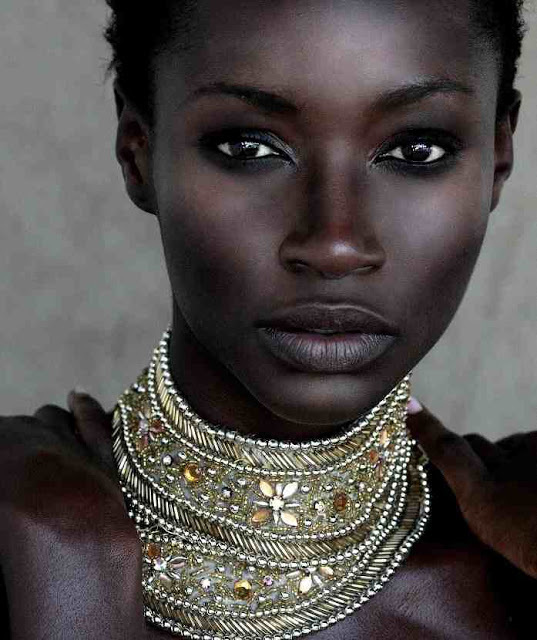
What is it about black features that supposedly makes them so unattractive to some? Is it the lush lips, High melanin skin complexion, or just the coarse and strong hair? In my personal opinion, there is absolutely nothing wrong with the physical features of the African, which I shall demonstrate

First and foremost, we need to understand why different groups of humans appear so distinctly different from one another. Before I get into this, I also want it to be known that humans share about 99.99% of our genetic code with each other, regardless of “race”. Humanity as a species (anatomically modern) first originated approximately 200,000 years ago in East Africa. Then, around 50,000 years ago, bands of humans left Africa for Europe and Asia (Humans reaching the Americas 15,000 years ago). That being said, the first humans had to survive in the very hot and arid conditions of Africa. The sun provides humans with vitamin D through ultraviolet radiation. Too much UVR and a person can develop skin cancer. A good protection from this is to have a lot of melanin, which translates into darker skin, to protect Humans from skin damage. To project the tops of our heads, coarse and tightly bound hair was needed. To better expatriate sweat, broad facial features with larger surfaces tend to do a better job.

So, why are African features considered unattractive if they offer so many evolutionary advantages? First, it has to do with the legacy of slavery. When one group of physically different humans subjects another group of humans, those attributes that belong to the subjected group are deemed inferior, just as their status in that respected society.

Black people in the United States as well as across Latin America. Embody a sense of inferiority in their appearance. This is why black women in America spend billions of dollars every year on hair straightening product as well as hair extensions(colloquially called weaves). The fact that women who are lighter in skin complexion and possess European physical features are considered more attractive by many black men. And why many black people will ridicule each other for possessing features that deemed to African, such darker skin(being called crispy, darker),thicker lips(bottom lip jocks), or coarser hair(nappy hair, bad hair as opposed to good hair which would be European).

There is a societal delusion in the inferiority appearance of Africans. One common derogatory remark is the comparison of black people to monkeys. I will show how this dis-remark can be reversed on Europeans

First and foremost Monkeys are quit hairy, African tend to have very little in body hair as compared to Europeans. Secondly monkeys tend to coated in hair that is similar to Europeans texture then to Africans. Thirdly monkeys are quite pale if you were to shave them. Fourthly monkeys have extremely thin lips and noses similar to Europeans than to Africans. This is not to compare Europeans to primates but just to demonstrate how nonsensical it is to call Africans monkeys.

There is no reason why black people or any other racial group should be demonized by their appearance. At the end of the day, we are all humans and beauty can be found in every skin hue, hair grad, eye shape, and body size!

The Hip Hop Fallacy of racial harmony

There is a false belief(mainly propagated by rappers) that hip hop has been a driving force in the decline of racism. I would like to present an argument that this is indeed false. White Americans in this country have a long history of enjoying and appropriating black culture but still maintaining their racist ideologies towards blacks. Let’s have a brief history lesson of black music in America.

Let’s begin with Ragtime. Ragtime which was a precursor to Jazz and arguably the most popular musical genre across the world during the early 20th century. Ragtime began in the late 19th century in African American communities in St Louis. The most popular composer Scott Joplin, who was born in Northeast Texas. Helped to make Ragtime a popular and viable genre. His most famous piece, Maple Leaf Rag (which I advise anyone reading to listen to on YouTube).

Point to be made from this is while Ragtime a black musical art-form was the most popular musical genre of its era, with many of its black musicians being celebrated worldwide(sound familiar). Occurred during the nadir years, the worst period of race relation(post slavery) in this American history. On average, a 100 African Americans were lynched a year, between the years of 1875 and 1920.

Jazz which followed right after Ragtime was the most popular genre in the world, from the 1920s up into the 1930s. The 1920s was, in fact, synonyms with Jazz, with many historians coining this period as the Jazz age. Jazz could be heard from clubs all the way from up in Harlem to Paris to even Tokyo. It perhaps was the first time that American culture began to have a global presence. While many Whites frequent Black establishment(really only in the Northeast cities and a few Midwest cities) you would have been hard press to any Blacks frequenting White establishments.

I bring up Ragtime and Jazz just to illustrate a historical example of White’s enjoying the fruits of African American culture during a period of legalize racism and rampant racial violence(look up the red summer of 1919). Now let’s get into the modern era.

Hip Hop today is a musical genre that is widely consumed around the world. Millions of youth from various ethnic backgrounds have adopted hip hop fashion, language, and many other of its cultural facets for themselves. Hip Hop in itself is a facet of African American culture. originating in poor African American communities in the Bronx. As way for young inner city kids to express themselves.

This brings me to an important topic, the usage of the N-word(or frankly nigga). The word Nigga is just a simple modification of the word Nigger. A derogatory word used against African Americans throughout most of their history in America.

First, there’s the argument that nigga is an entirely separate word from Nigger with its own meaning and context. This is not the case at all. Some will say that nigga is used as a term of endearment, no it’s not! I’ll present you an example of this

Two black men who are friends greeting each other “wats up my nigga” example two an inner city drug deal gone bad “I’m going to kill you nigga” can you figure out the point I’m trying to make.