The Attraction Divide: Black Men and Interracial Preferences

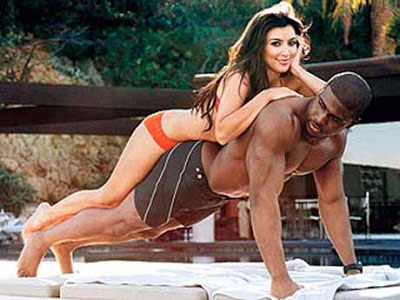
Black men, more so than any other group of men, hold an ‘aw’ for women outside their ethnic group. Now, some would state I am making a bold statement and that I am generalizing all black men. But I would like to pose crucial points to prove my case and to also acknowledge that not all black men fetishize different ethnic women(I include myself in this acknowledgement).

Let’s examine the media; one needs only to watch the typical hip-hop video and would be hard-pressed to find a black woman who possesses dark skin, typical African features, as well as natural hair. The male protagonists in these videos (the rappers) are, for the most part, black men themselves but yet they surround themselves with fairer-skinned women. Hip hop acts as a form of fantasy; typically, men brag about their access to wealth, power, and women. In the fantasy that hip hop portrays, women who are light-skinned, possess straighter to curly hair, and have racially ambiguous features are seen in high esteem.

As a black man who lives in New York City, I can tell that many women of other ethnicities do not hold the same gaze on black men as we do towards them. One only needs to go on a dating website to find how many advertise how they prefer white and Hispanic men, with some explicitly listing “no black men”. I personally do not mind if some women are not attracted to black men, for I do not seek their validation. But many other black men do. One needs to search countless forums asking the same typical questions: “Do Asian women like black men?”, “Do Middle Eastern women like black men?”, “Do Russian women like black men?”, I would highly doubt if the same question is asked vice versa.

One has to look at the disparities in marriage rates between black men and women; more black men are married than black women, even though there are 1 million more black women to men. This can be(at least partially) explained by the fact that 20% of black men who get married marry women outside their race.

My case in point is that as black men, we need to stop putting these white, Asian, and Hispanic women on these pedestals. The reason I believe we pedestal these women is because the black community still holds a lot of self-hatred, which has been passed on to us through hundreds of years of slavery. That‘s the only reason why, as a collective, so many black men find typical Eurocentric features so attractive, i.e, light skin, straighter hair, etc.

In conclusion, I have nothing against being attracted to women of other races; I myself see the beauty in all races of women. My only objection is the pedestalling of other women while black men undermine our women. We as a people are still, in a sense, an “oppressed class”, particularly in the state of our mental affairs, and should do our best to get out of it, first starting with some self-love as people.
The Impact of Clothing on Identity and Status

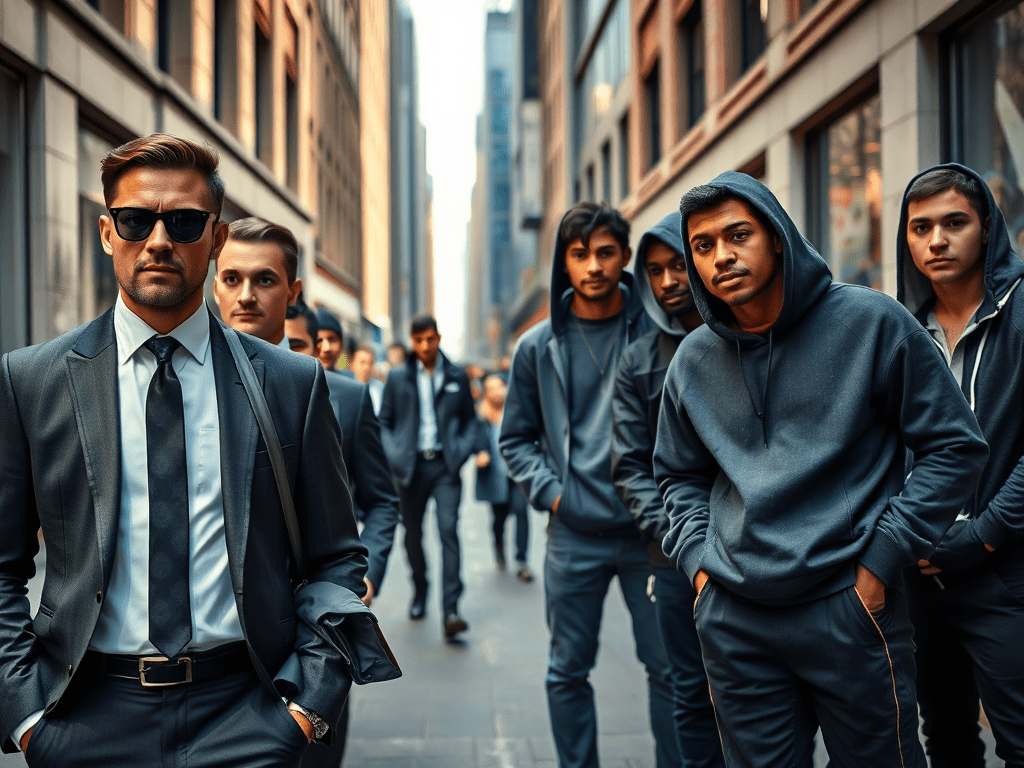
We live in a very materialistic world. How we dress defines what type of person we are. I say this because people stereotype and get a sense of idea on what type of person you are primarily by the way you dress. Here’s an example: you walk down Wall Street, what do you see? A large number of men wearing suits, your immediate assumption these are all wealthy men. You see another group of men in jeans and hoodies; your opinion of them may begin to deteriorate.

Why is it that we spend so much of our income on how we dress? What is the sole purpose of clothing? To regulate the temperature of our bodies(in which is why we wear coats in the winter), or is it to protects us from the environment that why we wear shoes on our feet(at least in the industrialized developed world); but yet people become obsessed with fashion to the point that they’ll spend their entire paycheck on one a shopping spree.

So what is the purpose of clothing? As I alluded to in my introductory paragraph, human beings use clothes as a form of identity. You recognize a doctor by his white trench coat, as you recognize a police officer by his blue, sometimes black uniform. We impose identities on people based on how they dress. A young man walks down the street, with sagging paint, wearing a do-rag, and it might come to mind that he is a hoodlum. Another man walks down the street wearing an Armani suit. We say to ourselves This person is wealthy and respectable. From my observation, clothes are used as a status symbol.

Yet is a pair of Air Jordans worth its 250$ price tag? Especially when you consider the amount of capital in labor(very little since it’s made by a laborer in China who gets paid a third of a U.S worker’s would) or the material input, which may not be more than 20$ dollars. I appreciate free market capitalism in which firms seek to make a profit, I get it. But at the same token some common sense has to prevail, as consumers we shouldn’t be so swept into spending our money(many of us work extremely hard for) just to wear the same iteration of sneakers that essentially hasn’t changed in design for 25 years and is purposely kept in low supply by Nike to jack up the price, to feel any type of self worth.

In society, many people(many times, typically from poor minority backgrounds) spend a great deal of their income on clothing, finding self-worth through keeping up with trends. This can be quite destructive, one can look at all the black who have been murdered just for a pair of 200$ sneakers. How a person living in public housing and substitutes on government assistance still finds the spare income to allocate towards a pair of jordans, yet some of the rich’s people in the world spend very little in thought or on income on the way they dress. The most famous is Mark Zuckerberg, the founder of Facebook, whose net worth as of 2016 stands at around 46 billion. He famously only wears a gray t-shirt, blue jeans, and Converse as his typical attire.

There is a serious need for dialogue on priorities when a tech billionaire spends less on clothing than your typical inner city young man.