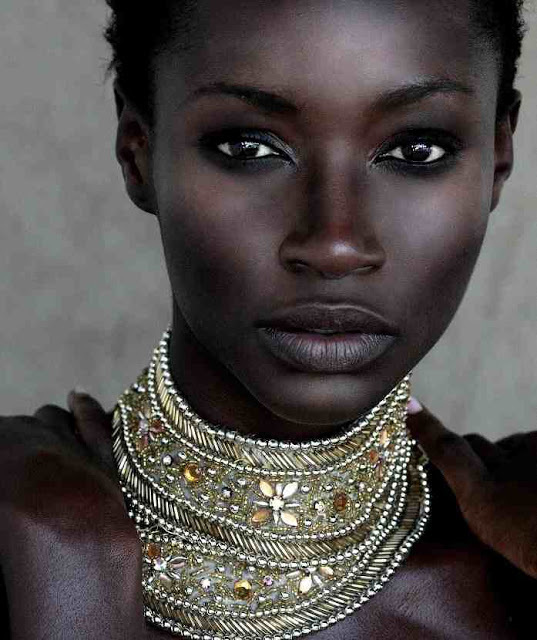
Is being black ugly?

What is it about black features that supposedly makes them so unattractive to some? Is it the lush lips, High melanin skin complexion, or just the coarse and strong hair? In my personal opinion, there is absolutely nothing wrong with the physical features of the African, which I shall demonstrate

First and foremost, we need to understand why different groups of humans appear so distinctly different from one another. Before I get into this, I also want it to be known that humans share about 99.99% of our genetic code with each other, regardless of “race”. Humanity as a species (anatomically modern) first originated approximately 200,000 years ago in East Africa. Then, around 50,000 years ago, bands of humans left Africa for Europe and Asia (Humans reaching the Americas 15,000 years ago). That being said, the first humans had to survive in the very hot and arid conditions of Africa. The sun provides humans with vitamin D through ultraviolet radiation. Too much UVR and a person can develop skin cancer. A good protection from this is to have a lot of melanin, which translates into darker skin, to protect Humans from skin damage. To project the tops of our heads, coarse and tightly bound hair was needed. To better expatriate sweat, broad facial features with larger surfaces tend to do a better job.

So, why are African features considered unattractive if they offer so many evolutionary advantages? First, it has to do with the legacy of slavery. When one group of physically different humans subjects another group of humans, those attributes that belong to the subjected group are deemed inferior, just as their status in that respected society.

Black people in the United States as well as across Latin America. Embody a sense of inferiority in their appearance. This is why black women in America spend billions of dollars every year on hair straightening product as well as hair extensions(colloquially called weaves). The fact that women who are lighter in skin complexion and possess European physical features are considered more attractive by many black men. And why many black people will ridicule each other for possessing features that deemed to African, such darker skin(being called crispy, darker),thicker lips(bottom lip jocks), or coarser hair(nappy hair, bad hair as opposed to good hair which would be European).

There is a societal delusion in the inferiority appearance of Africans. One common derogatory remark is the comparison of black people to monkeys. I will show how this dis-remark can be reversed on Europeans

First and foremost Monkeys are quit hairy, African tend to have very little in body hair as compared to Europeans. Secondly monkeys tend to coated in hair that is similar to Europeans texture then to Africans. Thirdly monkeys are quite pale if you were to shave them. Fourthly monkeys have extremely thin lips and noses similar to Europeans than to Africans. This is not to compare Europeans to primates but just to demonstrate how nonsensical it is to call Africans monkeys.

There is no reason why black people or any other racial group should be demonized by their appearance. At the end of the day, we are all humans and beauty can be found in every skin hue, hair grad, eye shape, and body size!
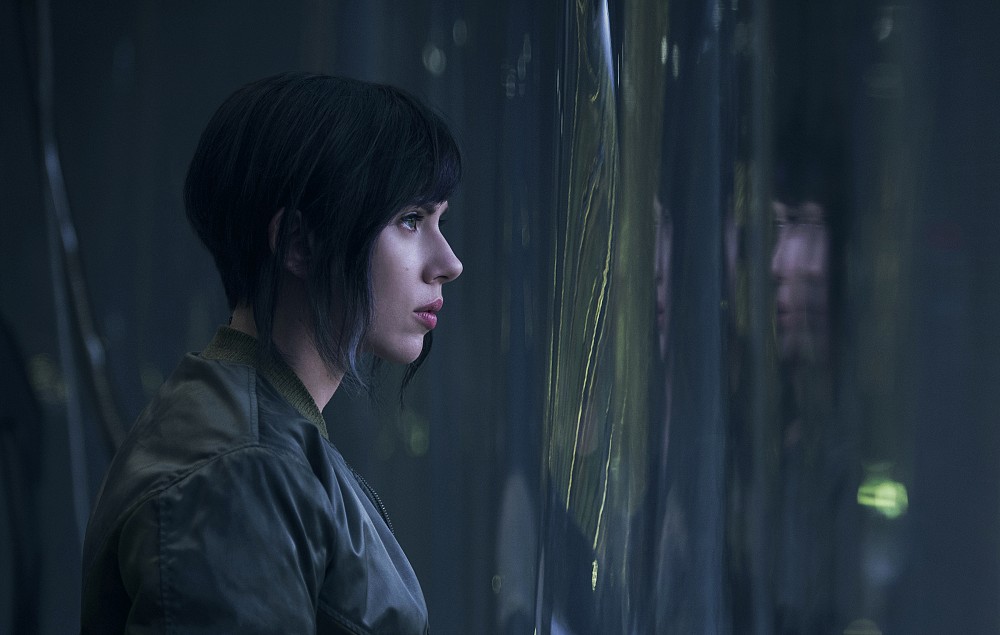
Why Asians are not underrepresented in Media

There has been a lot of anger spewed around on the grounds of Scarlett Johnson playing Major Motoko Kusanagi(A fictional Japanese Character) in the new Ghost in the Shell film, due for release sometime next year. My interest here is not to defend the producer’s casting choice, but to examine it from a different perspective.

First, let’s address the issue regarding Asians being underrepresented in the media. As of the 2010 U.S. census, Asians represent 4.8% of the U.S. population. The term ‘Asian’ doesn’t do well to convey the diversity of this population, which adheres to many different religions, speaks many different languages, is culturally quite diverse, and is quite phenotypically different from each other. The largest ethnicities counted among ‘Asians’ are Chinese, Indians, Filipinos, Koreans, and Japanese. Each group standing alone would barely make up 1% of the U.S population. Why I bring this to bear is that when arguing a group is underrepresented in something, we need to understand what percentage that group constitutes of the populace. Because Asians make up a relatively small minority of the United States, it seems logical that they would also make up a small percentage of what we see in the media.

The second point I would like to bear in mind is that people argue why filmmakers would cast a Caucasian lead in a film based on a Japanese property. It is essential to recognize that just because a movie is based on works from another culture, it doesn’t automatically mean the film will be set in that specific setting. Keep in mind that this is an American adaptation of a Japanese fictional story. Hence, casting actors that fit the American standards(which, according to the US Census, is still 60% white) isn’t that absurd. There are many instances, for example, when Japanese producers adapt American properties for their own market, casting Japanese actors in roles traditionally played by white actors. I think of the Japanese 1970s live-action Spider-Man TV show.

Finally, quite comically, is how the Japanese view this situation themselves. According to an article by Kotaku, internet comments from Japanese fans suggest that the Japanese themselves don’t view this as a significant issue. In fact, comments reflect how ironic it is that White people in the United States are bothered by this issue more than are Japanese people. I have attached the link to this article here… here…http://kotaku.com/the-japanese-internet-reacts-to-scarlet-johansson-in-gh-1771544034

Why Gender is not fully a social construct(part 1)

The argument has been made that gender is fully a social construct, with no biological merit. I want to argue against this point. First, I do acknowledge the fact that there are obvious cultural artifices in constructing how the two sexes behave. Pink is often associated with girls, while blue is typically linked to boys. Ashley is a girl’s name, and John is a boy’s name. These are all examples of gender norms established by society. But there is also a certain predisposition that is fully biologically based. Point one, men and women have varying degrees of hormonal differences. Men, on average, have far higher levels of testosterone than women, and women, on average, have far higher levels of estrogen. Our emotions and behaviors are heavily influenced by the chemicals in our brains. For example, higher levels of testosterone lead to a higher instance of aggression, assertiveness, and violence. Estrogen makes individuals more empathetic. The unequal distribution of these two chemicals among the sexes leads to differences in biological dispositions and behavior.

Many point out how Gender roles are socially based. But I want to argue that gender roles are a part of human evolution. Humans are a sexually dimorphic species, meaning there is a physiological difference between the sexes. Men are on average 3 inches taller and weigh 25% more than women. Nature doesn’t just make species sexual dimorphic unless there are some sexual survival benefits from it. Case in point, a book written by Leonard Shlain “Sex, Time, and Power”(A must read) Shlain( a surgeon) theorizes that because women on general suffer from Iron deficiency(due to the fact they lose blood every month from menstrual cycles, as well as their red blood cells produce less Iron), and the fact women have to go through eight months gestation and six years weaning a newborn child. Women needed men to help them attain Iron by providing them with meat; in return, the men got copulation.

For those (particularly feminists) who are skeptical about this. Imagine 150,000 years ago, living in the Savannah of East Africa, being a pregnant mother (let’s imagine 6 months), trying to go hunting. You would put yourself and your child at great risk. Sure, you would be able to go forging, but subsisting on local vegetation alone will not be enough for you and your gestating child. Men would have to go out and hunt while the women remained in the village. This arrangement would have existed for all of humanity until the emergence of civilization around 10,000 years ago.

With the beginning of civilization, humans transitioned from relying solely on wild game and vegetation to domesticating both crops and animals. Many of the roles that women had previously held remained largely unchanged, as women still became pregnant and had to care for their young children. Men now had to participate in the field or face starvation. We see the emergence of patriarchy in this time period. Men, having a physical advantage over women, took responsibility for keeping society safe from outsiders as well as undertaking all the intense labor required for agriculture.

Feminism as we know it wouldn’t become a serious ideology in Human affairs until the Industrial Revolution, for good reason. Humanity (at least in the West) wasn’t reliant on muscle power, but on stem and steel to grow its food. Women could go out to work. This new era of technological advancement is the only reason feminism was able to emerge!